How to Turn an Idea into an Invention: A Complete Guide to Innovation, Prototype Development, and Patent Creation
Innovation is one of the most powerful forces driving technological progress and industrial growth. Every successful invention begins with a simple idea, but transforming that idea into a real product, system, or industrial solution requires creativity, technical knowledge, research, planning, and persistence. From engineering and construction to robotics and smart technologies, inventions continue to shape the modern world and improve the quality of life for millions of people.
Many people have creative ideas, but only a small number know how to convert those ideas into practical inventions. The journey from imagination to innovation involves several important stages, including identifying a problem, conducting technical research, developing a prototype, testing performance, and protecting intellectual property through patent registration.
This article explains the complete invention process and provides a detailed overview of how innovators, engineers, researchers, and entrepreneurs can successfully transform an idea into a valuable invention.
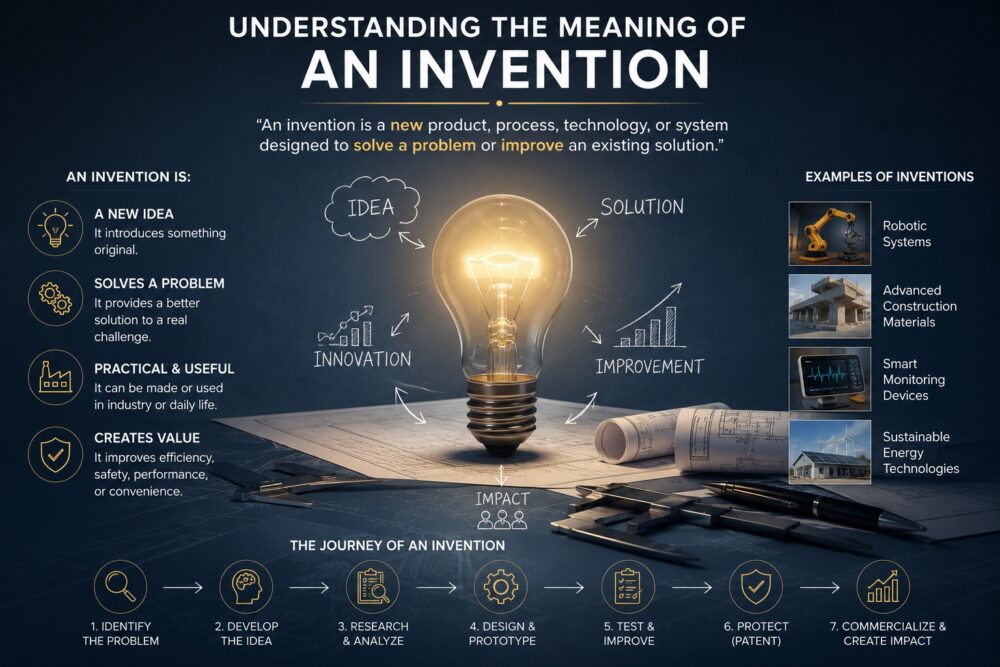
Understanding the Meaning of an Invention
An invention is a new product, process, technology, or system designed to solve a problem or improve an existing method. Inventions can be simple or highly advanced, but successful inventions usually share one common feature: they provide a useful solution.
In modern industries, inventions are responsible for major advancements in:
- structural engineering,
- robotics,
- construction technology,
- artificial intelligence,
- transportation,
- renewable energy,
- healthcare,
- manufacturing,
- and smart monitoring systems.
Engineering innovation is especially important because it creates practical technologies that improve efficiency, safety, durability, sustainability, and productivity.
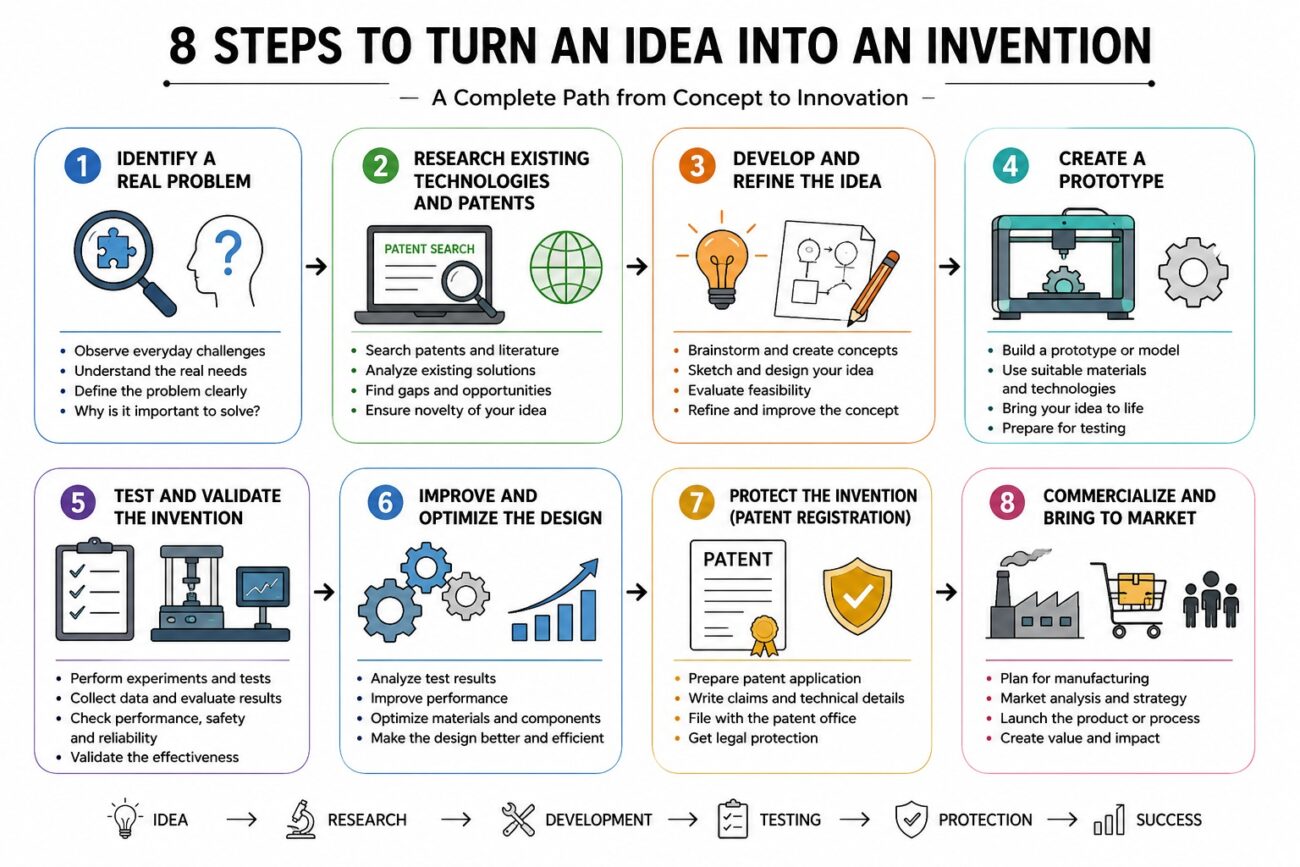
Steps to Turn an Idea into an Invention
Step 1: Identify a Real Problem
Every great invention starts with identifying a real-world problem. The most successful inventors carefully observe daily challenges and search for opportunities to improve systems, reduce costs, simplify processes, or increase performance.
Many innovative ideas come from:
- workplace challenges,
- industrial inefficiencies,
- safety concerns,
- environmental problems,
- or limitations in existing technologies.
For example, an engineer working in structural laboratories may notice that traditional testing systems are expensive, slow, or difficult to install. This observation could inspire the development of a new modular testing frame, automated monitoring system, or robotic testing device.
The key to successful invention is not simply creating something new. The invention must solve a meaningful problem in a practical and effective way.
Step 2: Research Existing Technologies and Patents
Before investing significant time and money into an invention, it is essential to conduct detailed research. This stage helps inventors understand whether similar products or patents already exist.
Patent research is extremely important because it:
- prevents duplication,
- reduces legal risks,
- identifies competitors,
- and helps inventors discover opportunities for improvement.
A patent search also helps determine whether the invention satisfies one of the most important patent conditions: novelty.
Why Patent Search Matters
Many inventors make the mistake of building prototypes before checking existing patents. This can result in wasted time and financial loss if the invention has already been registered.
Patent research allows innovators to:
- evaluate originality,
- improve technical design,
- identify market gaps,
- and strengthen their patent applications.
Useful research sources include:
- patent databases,
- engineering journals,
- scientific papers,
- technical reports,
- and industrial publications.
Step 3: Develop and Refine the Idea
Once the idea appears technically feasible and unique, the next step is concept development.
This stage includes:
- creating technical sketches,
- designing system layouts,
- selecting materials,
- evaluating manufacturing methods,
- and estimating costs.
At this point, inventors begin converting abstract concepts into engineering solutions.
For example, a structural engineer developing a robotic construction system may need to evaluate:
- mechanical movement,
- structural stability,
- load capacity,
- automation systems,
- sensor integration,
- and energy requirements.
Careful planning during this stage reduces development risks and improves prototype quality.
Step 4: Create a Prototype
A prototype is the first working version of an invention. It demonstrates how the concept functions in real conditions and helps identify design weaknesses.
Prototype development is one of the most exciting stages of the invention process because the idea becomes a physical reality.
Prototypes may include:
- mechanical devices,
- structural systems,
- software applications,
- laboratory equipment,
- robotic systems,
- or smart sensor technologies.
Benefits of Building a Prototype
Creating a prototype helps inventors:
- test functionality,
- improve design quality,
- analyze performance,
- attract investors,
- and demonstrate innovation potential.
Prototype testing also provides valuable technical data that can later support patent applications and commercialization efforts.
Step 5: Test and Validate the Invention
Testing is a critical stage in transforming an idea into a successful invention. Even the most creative concepts require validation to ensure reliability, durability, functionality, and safety.
Testing methods vary depending on the type of invention.
Examples include:
- structural load testing,
- cyclic loading tests,
- durability testing,
- environmental testing,
- software debugging,
- electronic performance analysis,
- and material evaluation.
Importance of Experimental Testing
Experimental testing provides real-world data that helps inventors:
- improve performance,
- optimize design,
- increase safety,
- and reduce future failure risks.
For engineering inventions, laboratory testing is often essential before commercial use.
Testing may involve:
- load cells,
- strain gauges,
- displacement sensors,
- data acquisition systems,
- and automated monitoring technologies.
The collected data helps engineers understand how the invention behaves under different conditions.
Step 6: Improve and Optimize the Design
Most inventions require multiple revisions before reaching final production quality.
Optimization may involve:
- reducing weight,
- increasing strength,
- lowering manufacturing costs,
- improving efficiency,
- simplifying installation,
- or enhancing automation.
This stage often requires collaboration between:
- engineers,
- researchers,
- manufacturers,
- software developers,
- and industrial designers.
Successful inventions are rarely perfect in the first version. Continuous improvement is part of the innovation process.
Step 7: Protect Intellectual Property Through Patents
After successful testing and refinement, inventors should protect their intellectual property by applying for a patent.
A patent gives inventors legal rights over their innovation and prevents unauthorized copying or commercial use.
Main Requirements for Patent Registration
To qualify for patent protection, an invention generally must satisfy three essential conditions:
1. Novelty
The invention must be completely new and not previously disclosed anywhere in the world.
2. Inventive Step
The invention should not be obvious to professionals or experts in the relevant field.
3. Industrial Applicability
The invention must be practical and capable of being manufactured or used in industry.
Step 8: Commercialization of the Invention
After obtaining patent protection, inventors can begin commercialization.
Commercialization may involve:
- manufacturing products,
- licensing technologies,
- selling patents,
- collaborating with companies,
- or creating startups.
Successful commercialization requires:
- market analysis,
- branding,
- product development,
- business planning,
- and investment strategies.
Technical innovation alone is not enough. Commercial success also depends on market demand and practical usability.
Turning Innovation into Reality